I threw away an entire row of lettuce one July, back when I first started farming my little plot down here in bayou country. I came out in the morning to find every last head stretched tall and skinny, crowned with little yellow flowers, leaves gone stiff and pale. I thought I'd killed them — that I'd done something wrong and the heat had just finished the job for me. So I pulled them all up and composted the lot. That evening, I told my grandmother Céleste what happened, expecting sympathy. She looked at me like I'd poured good gumbo down the drain. "Chère," she said, "you threw away your supper."
Thirty Years of Summer Greens in Louisiana Heat
I'm Maggie Fontenot, and I grow salad greens down in bayou country where summer is less a season and more a personal trial. Heat and humidity move in by April, and by June, my lettuce is already in a full existential crisis. What the seed packets call cool-season crops — well, they clearly weren't written by anyone farming in Louisiana. Out here, we don't get a cool season so much as a brief polite pause between one hot spell and the next.
I've been coaxing greens out of this stubborn land for over thirty years, and most of what I know came from refusing to give up on plants that everyone else wrote off. My grandmother Céleste taught me that wasting food was a kind of rudeness — a disrespect to the earth that grew it. So when lettuce bolts, I don't see failure. I see an ingredient that's changed its mind about what it wants to be.
The Morning I Learned Bolted Lettuce Is Not the End
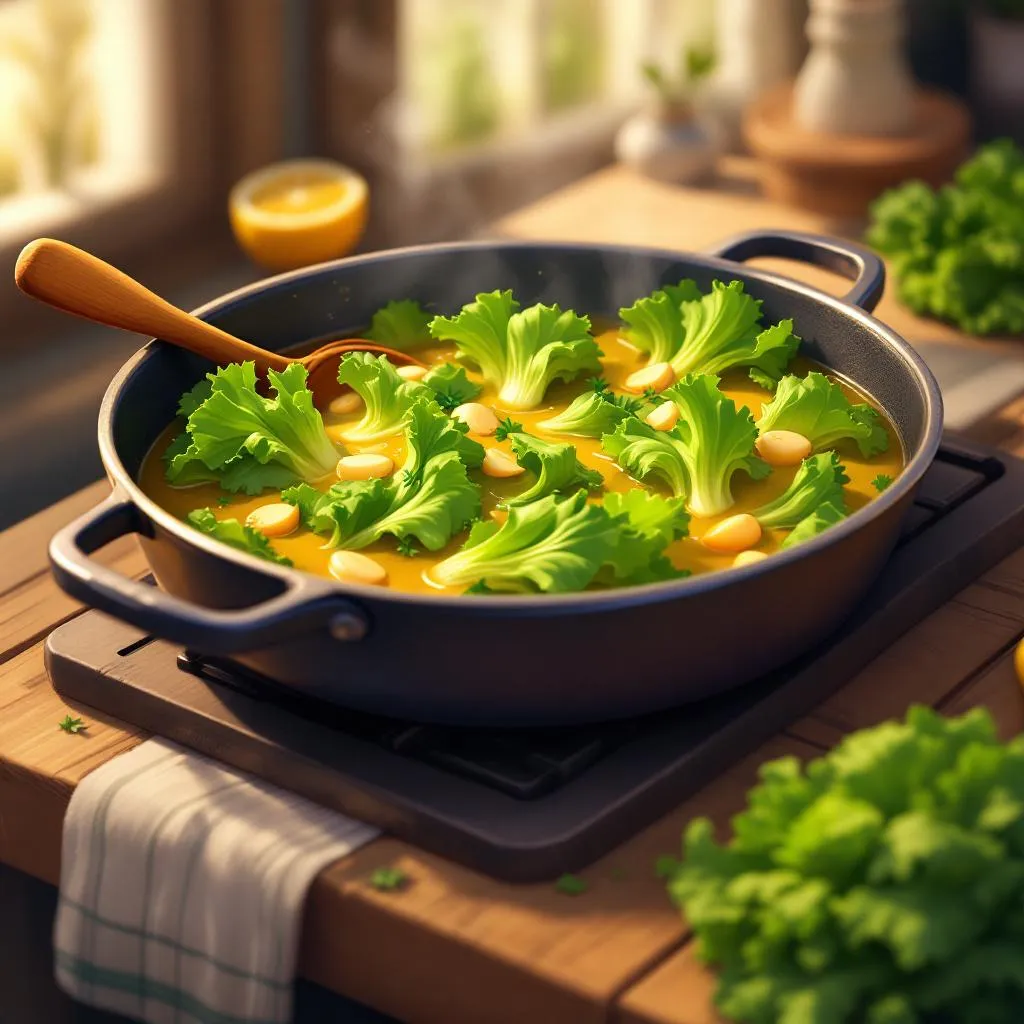
After Céleste's gentle scolding, I followed her into the kitchen and watched her take a bolted lettuce she'd saved from her own garden — tall stalk, flowers open, leaves turned a little yellow at the tips — and braise it in a skillet with a splash of broth, butter, and garlic. Ten minutes later she set a bowl in front of me that tasted like something between tender cooked spinach and a proper bayou green, with a pleasant slight bitterness that the broth had softened down to something almost sweet.
That was the moment I understood that bolting isn't the death of a crop. It's a phase change. The lettuce isn't ruined — it's just moved on to a different chapter. And if you're willing to meet it there, there's still a real meal in it.
What Bolting Actually Is (And Why It Makes Leaves Bitter)
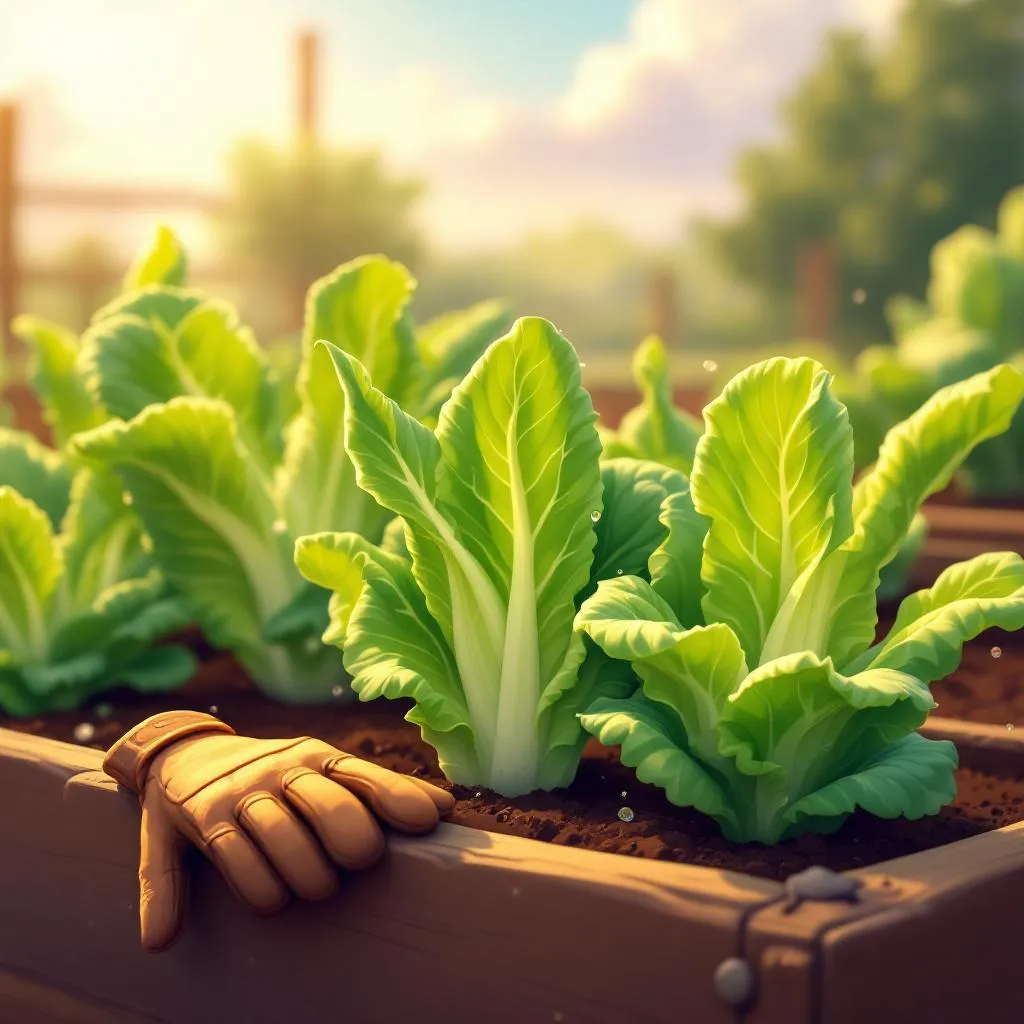
Bolting is what happens when a lettuce plant decides it's done being a salad and starts being a seed-maker. It's triggered by heat, long days, and sometimes drought stress. When the plant senses conditions turning hostile, it redirects all its energy into that tall central stalk, pushing out flowers and eventually seeds — a last-ditch effort to make sure the next generation survives even if this one doesn't.
All that redirected energy changes the leaves. They get more bitter because the plant produces more of a milky compound called lactucarium — that's actually why lettuce is related to dandelion, which you've probably noticed is also quite bitter. The stalk turns fibrous and woody. The leaves get thinner, cupped upward, and eventually pale. But here's the important part: they are not toxic. They are not unsafe. They are just different.
And different, in a Cajun kitchen, is the beginning of a recipe.
- → Early bolt (stalk just starting to elongate): Leaves are still mostly mild. Harvest immediately — still good raw in salads, wilted, or lightly sautéed. This is your best window.
- → Mid-bolt (stalk tall, flower buds forming): Noticeably more bitter. Best cooked — braised, sautéed, or added to soups and stews. Bitterness mellows beautifully with fat, heat, and a splash of acid.
- → Full bolt (flowers open, some seeds forming): Leaves are quite bitter and beginning to toughen. Still usable braised with bold flavors like garlic, smoked meat, or vinegar. Young flowers are edible and make a lovely garnish.
- → Late bolt (seeds forming, leaves yellowing): Compost most of the foliage, but collect those seeds carefully — that is free seed stock for your next planting season.
The Taste Test Rule
Before you decide what to do with a bolted lettuce, taste a leaf. Bitterness is personal, and not all bolted lettuce tastes the same. Some is mildly tangy — perfectly fine in a warm salad. Others are sharp enough to make your eyes water a little. Your tongue is the best tool you have. If it makes you pucker hard, cook it. If it is mild, you might still eat it raw with a good vinaigrette.
A Louisiana July Morning in My Lettuce Rows
Come late May, I start walking my rows every morning with a bowl in one hand and my reading glasses on, watching for the first sign of bolting: that telltale stretch in the center of the plant, the leaves uncupping, the little nub of a bud pushing up. When I see it starting, I harvest everything I can use fresh right then and there. I do not wait.
But I do not pull up what is left either. What is already mid-bolt goes into a second basket — my cook it tonight pile. By July, half my kitchen counter is bolted lettuce in some form: some braising in a pot with smoked sausage and chicken broth, some chopped fine and folded into a scrambled egg, some getting a quick wilt in bacon drippings with a splash of cider vinegar. My neighbor Corinne from two plots over brings me her bolted leaves now too. She used to call it kitchen trash. I call it Tuesday supper.
"Bolted lettuce isn't a failed crop. It's a crop that changed its plans — and a good farmer changes her plans right along with it."
— Maggie Fontenot, Heat-Hardy Greens Grower
Why the Co-op Cares About Every Last Leaf
When I bring my harvests into the co-op, I hear the same refrain from farmers up and down the bayou: the heat came early, the lettuce bolted, half the crop felt like a loss. I used to nod and say nothing. Now I speak up — because the co-op's whole reason for existing is to get food to people who need it, and food that ends up composted because a farmer didn't know what to do with it is food that did not feed anyone.
Learning to rescue bolted greens — or to donate them to neighbors, community kitchens, and the folks the co-op serves — is not just a cooking tip. It is farming that lines up with why we are all out here in the first place. Every head of lettuce that makes it to someone's table instead of the compost pile is the whole mission, right there.
- → Less food waste: Bolted greens that get cooked or donated mean more total food produced from the same plot across the same season — no extra seed, water, or work.
- → Free seed stock: Letting a few plants go to full seed gives you hundreds of seeds for the next planting. Label your strongest performers and let them go. It costs nothing.
- → Pollinator benefit: Flowering lettuce attracts bees and beneficial insects that help every other plant in your garden. Leaving a few stalks to bloom is a gift to your whole plot.
- → Community knowledge: When experienced farmers share what to do with imperfect harvests, it lifts everyone's yields — not just their own. One conversation can save a neighbor's whole season.
- → Economic resilience: A farmer who can use 95% of a crop instead of 70% makes their land work harder without spending a single cent more.
The Mistakes I See Farmers Make (I Made Every One First)
In thirty years of growing greens, I have made all the bolted-lettuce mistakes myself and watched my neighbors invent a few I hadn't thought of yet. Here is what trips people up most:
- → Assuming the whole plant is ruined: The leaves do not all bolt at the same rate. Inner leaves bolt last. Even on a fully flowered plant, younger inner leaves are often milder and still worth harvesting — check before you pull.
- → Trying to eat bolted leaves like fresh salad: They are not fresh salad anymore. Dressing them cold and raw and then wondering why your mouth rebelled is a natural mistake, but it is still a mistake. Cook them, or add acid — lemon juice or vinegar does wonders to cut bitterness.
- → Pulling the plant the moment bolting starts: Give yourself a day or two more. Early-bolt leaves are still mild enough for a warm salad or a quick sauté. Rushing can cost you a perfectly good harvest.
- → Ignoring the flowers: Lettuce flowers are edible, mild, and faintly sweet. They make beautiful garnishes on any dish and are a lovely surprise tossed into a mixed green salad. Do not compost them.
- → Forgetting to collect seeds: If you let a few plants go all the way, you will have more seeds than you know what to do with for your next planting. It is the most sustainable thing you can do with a bolted row.
Maggie's Braised Bolted Lettuce
Heat a heavy skillet over medium. Add a pat of butter and two smashed garlic cloves. Rough-chop your bolted lettuce leaves — do not worry if the pile looks enormous, it wilts down to almost nothing. Add a splash of broth or water (about a quarter cup), a pinch of salt, and a squeeze of lemon or a splash of cider vinegar. Cover and cook 5 to 7 minutes until tender. Taste and adjust. That is it. Bitterness becomes depth. What felt like a failed row becomes a side dish your grandmother would be proud of.
I want to encourage you, if your lettuce bolted this week: you have not failed at growing. You have succeeded at growing something until it outgrew what you expected of it. That is not the same thing. Farming in heat is hard. Farming anywhere is hard. The plants do not always cooperate with our plans, and the weather certainly does not. But the more you know about how to meet a crop wherever it is in its life, the less you lose — and the more you get to bring into the kitchen.
Céleste grew into her nineties, and she never once, to my knowledge, threw out a vegetable that still had something to give. She did not have a fancy word for it. She just called it sense. I have been trying to live up to her sense ever since, one bolted row at a time — and I hope you will too.