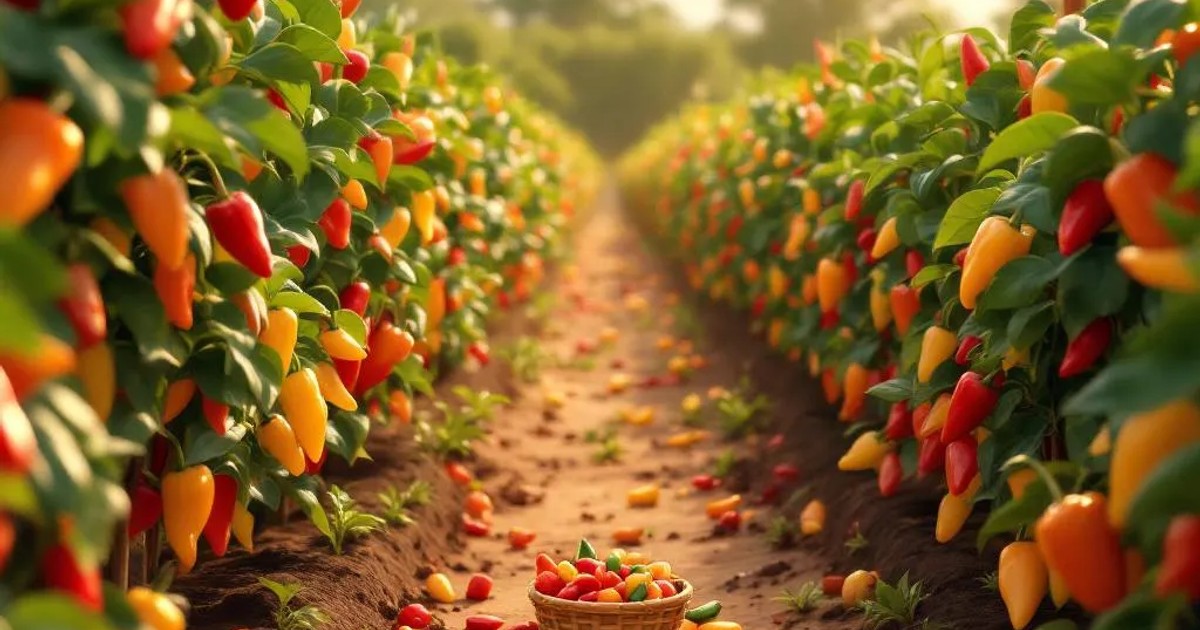

The first time I watched a pepper flower fall off the vine, I thought I'd done something wrong. The second time, I checked the soil pH. By the third time — and by then I was losing flowers by the dozen — I sat right down in the dirt between my rows and had a good cry. This was my first summer growing peppers in North Carolina, I had thirty plants and a head full of dreams, and my imaginary hot sauce empire was drifting away on the breeze, one tiny yellow blossom at a time.
If you've ever grown peppers, there's a decent chance you know exactly what I'm talking about. You wait for those little flowers to appear, you check on them every morning like they're something precious, and then one day you come out and they're just... gone. The plant looks fine. No bugs, no obvious disease. Just bare stems where flowers used to be. It is one of the most disheartening things that can happen in a pepper patch.
Forty Varieties Later
My abuela grew chiles the way other people breathe — without effort, without fuss, with an easy confidence that made it look like the plants just wanted to grow for her. She tended long rows of anchos and chiles de agua in the highland air of Oaxaca, and I spent summers trailing behind her, learning the names of every variety, how to read a leaf's color, when the soil felt right in your hand. When I moved to North Carolina in my late twenties, I figured I had a head start.
I did not have a head start. I had enthusiasm, a stack of seed packets, and a healthy overconfidence that would take three full growing seasons to correct. Now I maintain a 40-variety pepper garden alongside a small-batch hot sauce operation, and I sell my harvest through the cooperative every year. But I got here the hard way — which is the only reason I know what I'm about to tell you.
Three Seasons, Zero Peppers, One Obsession
That first summer I lost so many flowers I started keeping a small notebook — not to be scientific, exactly, but because writing things down made me feel like I was doing something. I wrote down temperatures, watering schedules, wind direction. What I did not write down, because I did not yet understand, was that peppers are exquisitely sensitive to stress. Any stress. All stress. And my plants were stressed in approximately fourteen different ways simultaneously.
By the end of season three, I had harvested exactly nine peppers from forty plants. Nine. My neighbor Darnell, who grows tomatoes three rows over, found me counting them on a wooden crate and very kindly did not laugh. He did, however, hand me a library book on plant physiology that changed everything. Turns out, the flowers weren't falling off because I was bad at gardening. They were falling off because my plants were making a decision — a very sensible, very frustrating decision.
The Real Reason Peppers Drop Their Flowers
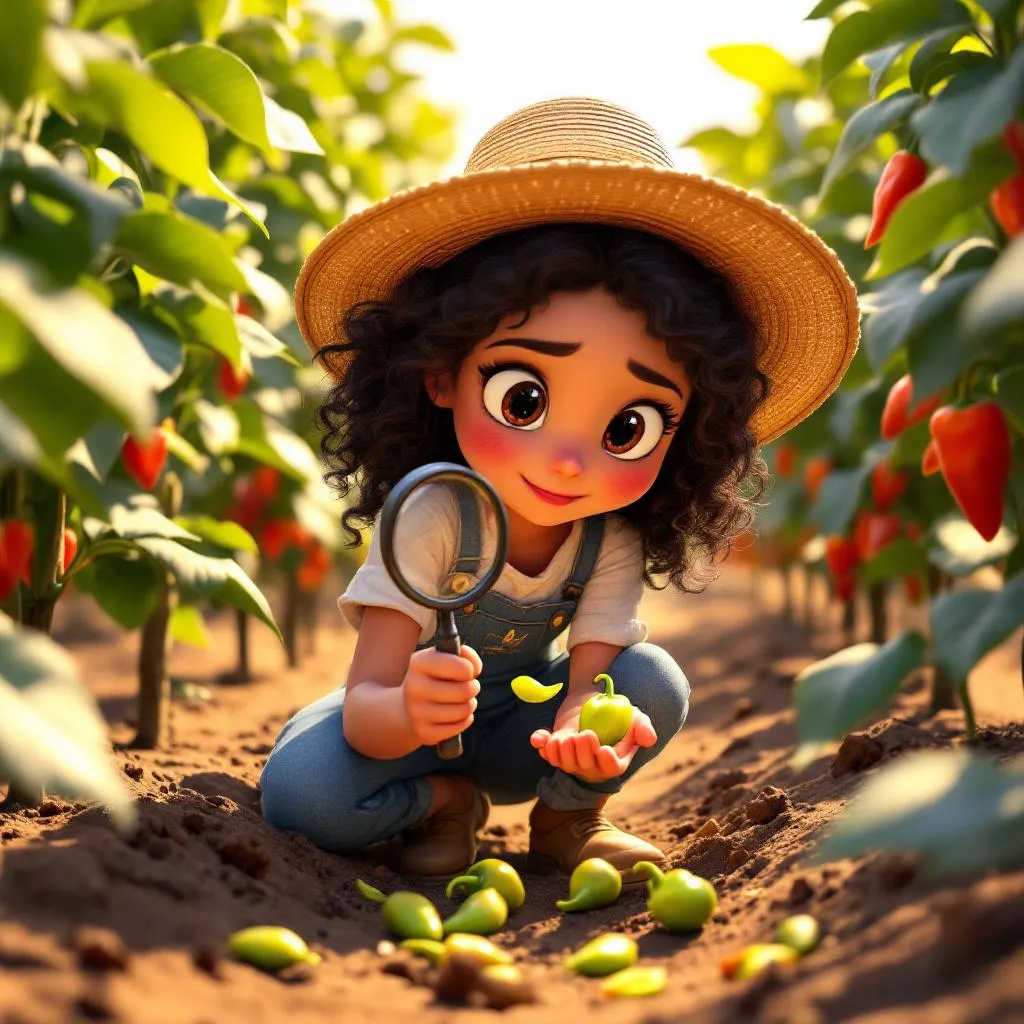
Here is what nobody tells you when you're starting out: a pepper plant drops its flowers on purpose. It's not a mistake, it's not a malfunction, and it's not a personal attack — though I grant you it feels like one. The plant is making a decision. When conditions get hard, the plant essentially says, I cannot afford to make fruit right now, and it lets the flowers go to put all its energy into simply staying alive.
Peppers evolved in tropical and subtropical climates where stress was real and constant — brutal heat, irregular rain, cool nights. Over thousands of years they developed a kind of internal triage system. A flower costs energy. A fruit costs a lot of energy. When resources get tight, the plant cuts its losses early and drops the flowers before it has to deal with half-developed fruit it can't finish. It's actually quite sensible. It's just hard to appreciate when you're the farmer standing there watching it happen.
The triggers are almost always one of a handful of things, and most of them come down to temperature, water, or nutrition. Once I understood that, I stopped guessing and started troubleshooting.
- → Temperature extremes: Peppers drop flowers when daytime temps climb above 90°F or nighttime temps fall below 55°F. At those extremes, pollen becomes nonviable, pollination fails, and the plant releases the blossom.
- → Inconsistent watering: Going from bone-dry to flooded and back again tells the plant that resources are unpredictable. That uncertainty alone is enough to trigger a survival response. Steady, even moisture is everything.
- → Too much nitrogen: A fertilizer heavy on nitrogen pushes the plant to grow lush leaves and stems instead of flowers and fruit. Your plant looks gorgeous. It is also, for practical purposes, not going to give you peppers.
- → Poor pollination: In a still greenhouse or during a stretch with no breeze and no bees, flowers don't get properly pollinated. The plant notices — and drops them. Wind and pollinators matter more than most people realize.
- → Root stress: Newly transplanted seedlings, rootbound containers, or waterlogged soil can all compromise the roots and send stress signals straight to the flowers. Healthy roots underpin everything else.
Heat wave quick fix
If your peppers are dropping flowers during a heat wave, drape a light row cover or shade cloth over them during the hottest afternoon hours. Knocking off even five degrees can make a real difference. It won't fix everything, but it gives the plant a little breathing room — and sometimes that's all it needs to hold onto its flowers.
July on My Farm — A Very Specific Disaster
Last summer I had a block of Ají Amarillo that was absolutely glorious in June — heavy with buds, deep glossy leaves, everything I could have asked for. Then July arrived. North Carolina in July is not subtle. We had two weeks where temperatures hit 95°F every single afternoon, and my irrigation timer got knocked off schedule by a power blip I didn't catch for three days.
I watched those plants drop every blossom in the first two weeks of the month. It looked like autumn on fast-forward, except the leaves were still green and it was a hundred degrees. By the time I steadied the watering and the temps eased up in August, the plants came back — peppers are resilient, I'll give them that — but we lost nearly a month of potential production. The co-op gets what we can bring, and that month, we brought a lot less than I'd hoped.
What I did right: I didn't panic and throw fertilizer at them to 'help.' That is the move that turns a bad situation into a catastrophe. I steadied the water, put up shade cloth in the afternoons, and waited. Patience isn't glamorous, but it's the right answer more often than any product you can buy.
"A pepper plant that's dropped its flowers isn't dying — it's surviving. Your job is to give it a reason to start thriving again."
— Nadia Solano, Solano Pepper Farm
Why the Co-op Cares About Every Flower That Sets
When I sell my harvest to the cooperative, those peppers become part of something bigger. The co-op channels a share of every sale to support non-profit farms that grow food for communities that need it. Every jar of hot sauce, every basket of fresh chiles — it all starts with a flower that stayed on the vine long enough to become fruit.
The farms our co-op supports practice the same kind of careful, patient growing that I had to learn the hard way. They work with the plant's natural rhythms instead of against them. That philosophy — reading what the plant needs instead of overriding it — is exactly what separates sustainable farming from the kind of high-input growing that depletes soil and burns farmers out.
- → They read plant signals: A wave of flower drop is a message, not a mystery. Sustainable farmers watch their plants constantly and respond to what they see.
- → They build living soil: Consistent organic matter means more stable moisture and nutrition — fewer of the stress spikes that trigger blossom drop in the first place.
- → They protect pollinators: Hedgerows, cover crops, and pesticide-free zones keep the bees working — which keeps the flowers setting.
- → They fertilize slowly: Compost and slow-release amendments feed plants steadily, avoiding the nitrogen flush that produces beautiful, flowerless, fruitless plants.
- → They share what they learn: The techniques I finally figured out after three bad seasons, I've now passed on to four neighbors. That's how sustainable farming actually spreads — one conversation at a time.
Mistakes I Still See Every Spring
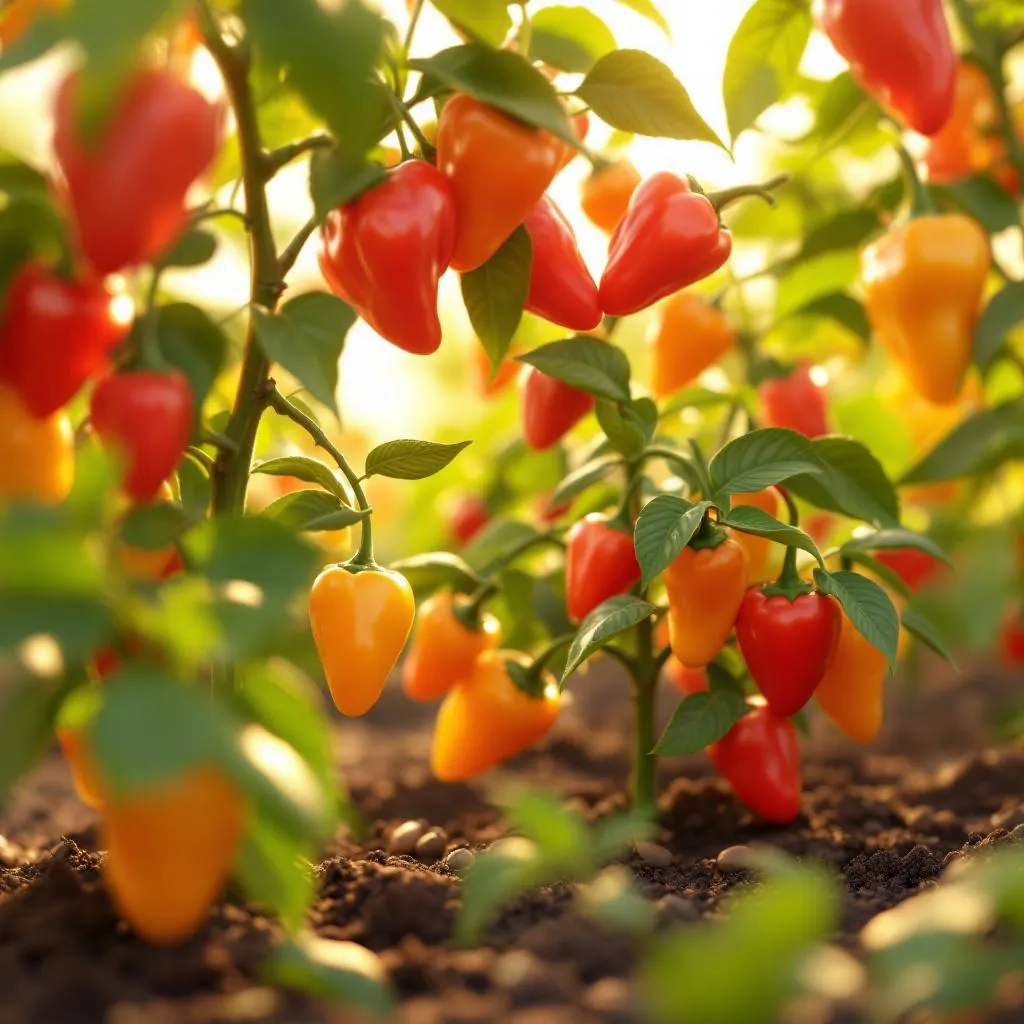
I teach a short workshop at the community center every April, right before planting season. I see the same mistakes year after year. I made every single one of them myself, so I mention them with zero judgment — just hard-won recognition.
- → Fertilizing during a heat wave: Your plant is already stressed. Adding a nitrogen push sends it further into leaf mode and away from flower mode. Hold the fertilizer. Steady the water. That's it.
- → Overwatering to compensate for heat: If flowers are dropping in dry heat, the instinct is to soak the plants. Flooding stressed roots just adds root stress on top of heat stress. Water consistently, not desperately.
- → Planting out too early: A cold snap after transplanting creates stress that can haunt the plant all season. Wait until nighttime temperatures are reliably above 55°F before putting seedlings in the ground.
- → Ignoring container size: A rootbound plant in a too-small pot will drop flowers all season regardless of what else you do right. If your container peppers are struggling, check the roots — if they're circling the bottom, it's time to size up.
- → Giving up after a drop: Plants that drop their flowers almost always recover when conditions improve. I've had plants that looked completely done in mid-August set their best fruit in September. Don't write them off.
Nadia's daily temperature trick
I keep a simple outdoor thermometer hanging right in the pepper row — not in the shade, but right where the plants live. When I check it and see we're above 88°F by 10am, I know to expect some blossom drop and I bump up my watering frequency for the next two or three days. You can't always prevent it, but you can shorten it. Knowing what's coming is half the battle.
If there's one thing I want you to leave with, it's this: blossom drop is not failure. It's the plant talking to you. After three rough seasons, I finally started listening — and now I harvest enough peppers to keep a hot sauce operation running and bring surplus to the co-op every single year.
My abuela used to say that a plant that's struggling is a plant that's trying. I think about that every time I find a dropped flower on the soil — this little thing worked so hard to get where it was, and the plant let it go to try again another day. There's something worth honoring in that. Steady the water. Watch the temperature. Leave the nitrogen alone for a little while. And if the flowers still fall, give it time.
The peppers always come back.