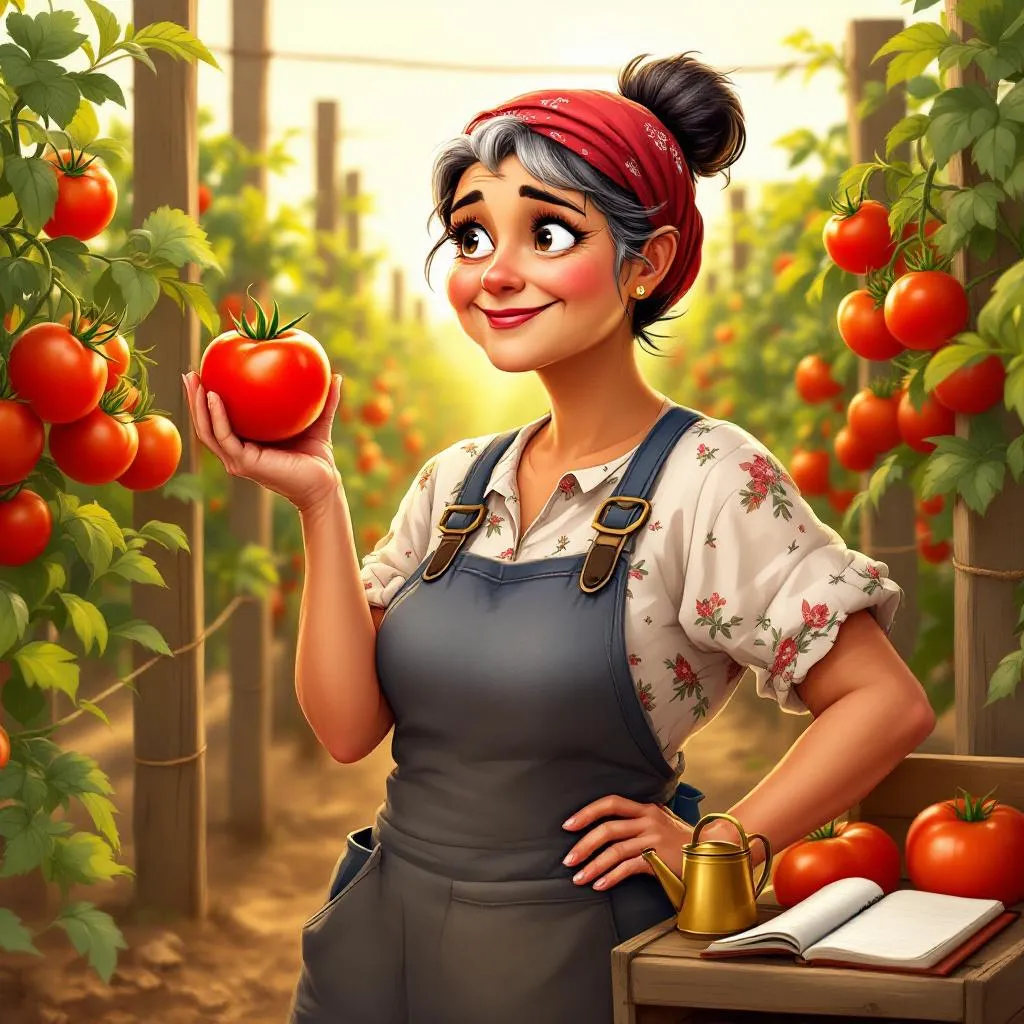
I want to tell you about the summer I thought I was cursed. Forty years of tomatoes under my belt. My grandmother's sauce recipe memorized before I could drive. And there I was, kneeling in the dirt behind my house in July, staring at a row of Roma tomatoes with black, sunken bottoms — like someone had pressed a thumb through the skin and let the rot set in. I cried a little. Then I opened my notebook and wrote at the top of a fresh page, in capital letters: CALCIUM WARS. That notebook has lived in my apron pocket ever since.
Forty Years and Still Learning
My name is Rosa Delacruz, though most people call me Nonna Rosa — even people who aren't my grandchildren, which I take as the highest compliment. I've grown tomatoes since I was tall enough to reach the bottom of my grandmother Concetta's garden in Palermo. When my family came to America, the tomato seeds came with us. Tomatoes, for us, are not just food. They are history.
Two seasons ago, my granddaughter Mia sat me down and said, "Nonna, there's a game where you grow a farm and it actually helps real farms that feed people." I told her I had a real farm right in the backyard. She handed me her tablet anyway. And now here I am, writing a post for Tiny Farm Heroes while my watering can — I call her Beatrice — waits patiently by the back door.
The Summer Everything Went Wrong
That cursed July, I had done everything right. Beautiful soil. I had been composting since March. My tomatoes climbed their stakes like they were reaching for heaven. And then, one by one, the bottoms turned. Not a little. Not one or two plants. The whole back row. Black and leathery, caved inward like a bad mood.
I called my neighbor Augusto, who has been growing vegetables since before I was born and refuses to admit it. He walked over, picked up one of my tomatoes, turned it over, and made the face of a doctor who already knows the answer. "Blossom end rot," he said. "Calcium." Then he handed it back to me and walked home. That was the entire consultation.
I immediately went to the garden center and bought every calcium spray I could find. I added crushed eggshells to the soil. I even dissolved antacid tablets in water — I had read this on a forum, which I should not have trusted. Nothing worked. The rot kept coming. It wasn't until I sat down and truly read about how calcium moves through a plant that I finally understood why.
The Real Cause (It's Not What You Think)
Here is the thing that surprised me, and still surprises people when I explain it at the garden club: blossom end rot is almost never caused by a lack of calcium in your soil. Most garden soil has plenty of calcium. The problem is that your tomato plant cannot move the calcium to where it needs to go.
Calcium travels through a plant the same way a letter travels through the postal system — it rides water upward from the roots through tiny channels called xylem. But here is the catch: unlike other nutrients, calcium cannot be sent back once it arrives somewhere. It goes to the leaves and it stays there. The developing fruit — especially the blossom end, the very bottom tip — is last in line. If water delivery is inconsistent, the fruit gets shorted. The cells at the bottom don't get enough calcium to build proper walls, they collapse, and they die. That is your black patch. That is blossom end rot.
So what causes the inconsistent delivery? Inconsistent watering. A dry spell followed by heavy rain. Going on vacation and coming home to crispy soil. Watering a little every day instead of deeply a few times a week. Any interruption in steady moisture disrupts calcium transport, and the fruit pays the price.
- → Water is the delivery vehicle: Calcium rides moisture up from roots through the plant — no steady water, no steady calcium to the fruit.
- → Boom-bust watering cycles are the main culprit: Dry periods followed by heavy watering are the most common trigger, especially during hot summer weather.
- → Root damage cuts off the highway: Tilling too close to plants, or waterlogged soil that rots roots, reduces the plant's ability to take up anything — including calcium.
- → Over-fertilizing can interfere: Too much nitrogen or potassium can compete with calcium uptake, even when calcium is physically present in the soil.
- → Soil pH can lock calcium out: If your soil pH dips below 6.0, calcium becomes much harder for roots to absorb regardless of how much is there.
Quick Win: Mulch Like You Mean It
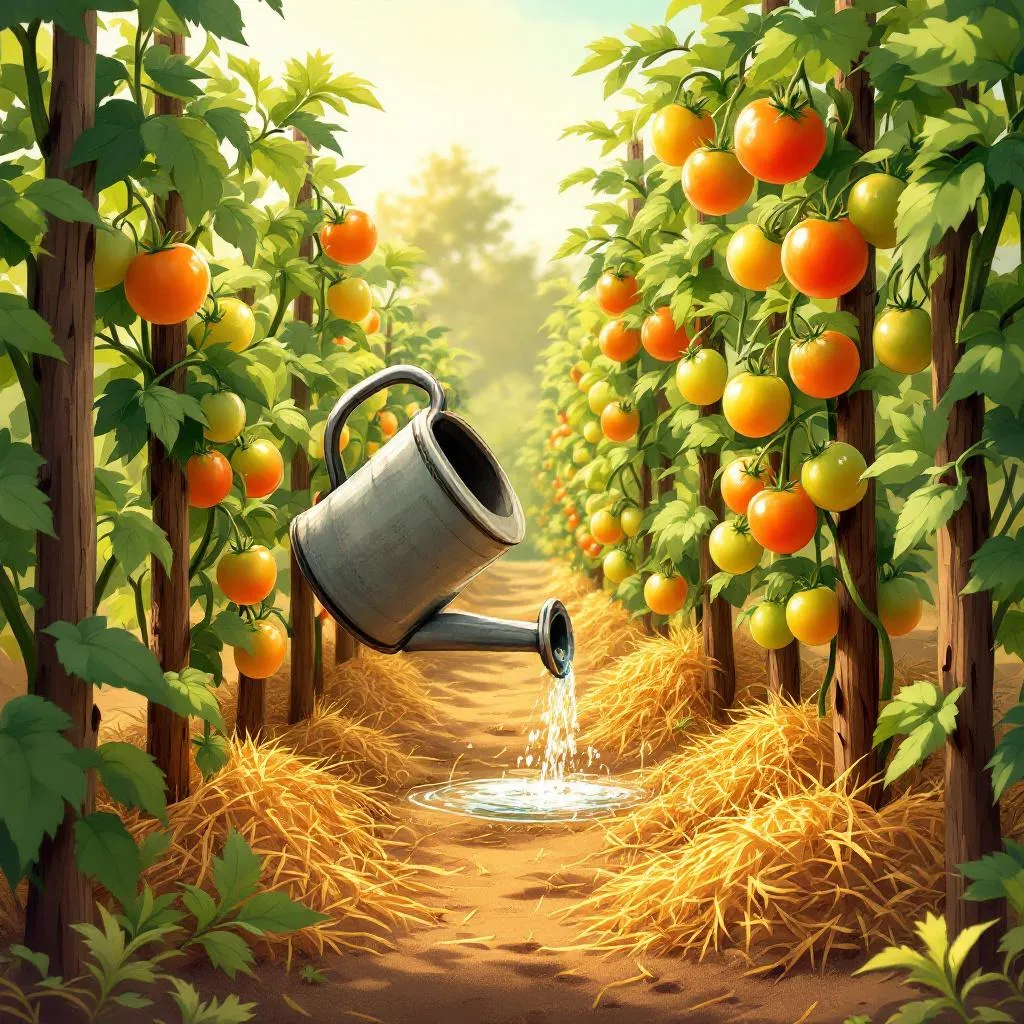
The single most effective thing you can do to prevent blossom end rot is mulch heavily around your tomato plants — at least three inches of straw, wood chips, or even dried grass clippings. Mulch keeps soil moisture even between waterings, which keeps calcium moving to the fruit consistently. I did not do this the summer of the cursed Romas. I have done it every summer since. The difference was immediate.
How This Shows Up in Tiny Farm Heroes
When Mia first introduced me to Tiny Farm Heroes, I noticed something right away: the game rewards consistency. You don't plant a crop and walk away. You tend it. You water it. You watch for signs that something is off. The game tracks your crop health, and if you neglect your plants through a dry stretch, you'll see it reflected in your harvest quality — and in how much makes it to the cooperative.
This mirrors real farming more than most games I've seen. In Tiny Farm Heroes, maintaining steady care routines — watering at regular intervals, choosing good soil upgrades, keeping your plot healthy — means your crops thrive and your cooperative receives better harvests. The cooperative then converts those harvests into real donations to real farms. Just like on a real farm, you are rewarded not for grand gestures, but for quiet, steady attentiveness. Show up every day. Pay attention. That's the whole game.
"Tomatoes don't need miracles. They need someone who shows up every day and pays attention. That's all Beatrice and I have ever done."
— Nonna Rosa Delacruz, Tomato Specialist & Calcium Crusader
Why Real Sustainable Farms Take This So Seriously
The real-world partner farms that Tiny Farm Heroes supports — farms that grow food and donate it to communities in need — cannot afford a bad harvest. When blossom end rot takes a row of tomatoes, that is food that does not reach someone's table. Prevention is not just about a prettier tomato. It is about efficiency, responsibility, and making every single plant count.
Sustainable farms use practices that naturally protect against blossom end rot, because those same practices are good for the whole living system of the farm — the soil, the water, the plants, the people. Healthy soil, smart water management, minimal waste. When crops are healthy, the harvests are plentiful, and the donations make a real difference.
- → Drip irrigation: Delivers water directly to roots at a slow, steady rate — eliminates boom-bust cycles and reduces water waste significantly.
- → Deep mulching: Keeps soil moisture stable between waterings, protects surface roots, and builds organic matter back into the soil over time.
- → Soil testing before amending: Sustainable farms test first to confirm what's actually needed — no wasted inputs, no guessing.
- → Minimal tillage near plants: Protecting shallow feeder roots means steadier nutrient and calcium uptake throughout the season.
- → Compost-enriched beds: Good organic matter helps soil hold moisture more evenly, naturally buffering against the dry spells that trigger BER.
The Mistakes I Made (So You Don't Have To)
I have made every mistake on this list. Most of them in the same summer. Consider this my gift to you — the collected wisdom of a person who spent two weeks trying to cure a watering problem with antacid tablets dissolved in a bucket.
- → Spraying calcium on the leaves: Foliar sprays can give mild short-term relief but don't fix the root cause. The plant still can't move that calcium to the fruit.
- → Adding eggshells mid-season: Eggshells take months to break down and won't help a suffering plant this summer. Amend with them in fall or early spring.
- → Watering a little every single day: Shallow, frequent watering encourages shallow roots. Water deeply and less often to push roots down where moisture is stable.
- → Flooding plants after a dry spell: Drowning drought-stressed roots causes further damage. Ease back in with steady, deep waterings rather than one desperate soaking.
- → Pulling plants with affected fruit: Blossom end rot is not a disease — it does not spread plant to plant. The rest of the harvest on that plant may be perfectly fine. Fix your watering and leave them.
In-Game Tip: Consistent Tending Beats Frantic Catch-Up
In Tiny Farm Heroes, skipping watering cycles and then tending heavily to make up for it mirrors exactly the boom-bust pattern that causes blossom end rot in real life. Check in on your tomato plots regularly — even briefly — rather than letting them go dry and flooding them with attention. Steady care keeps your crop health high, your harvest quality up, and more food reaching the cooperative for real-world donations.
You Can Do This — I Promise
I know that blossom end rot feels devastating the first time you see it. I know, because I cried in my garden and then drove to a garden center in my clay-stained apron and came home with things I didn't need. But now I understand it. And understanding it — truly understanding why it happens — makes all the difference.
The tomato plant is not failing you. It is telling you something. It is saying: I need steady water, every time, reliably. Water deeply. Lay down mulch. Check your pH if you're still struggling after that. And almost always, the problem goes away. The calcium was in the soil the whole time. It just needed a reliable road to travel, and you are the one who builds that road.
Whether you're tending your plots in Tiny Farm Heroes or kneeling in the dirt with a real watering can, the lesson is the same one I carved into the cover of my notebook years ago: pay attention, show up consistently, and the tomatoes will reward you. They always do. Beatrice and I will be right here rooting for you.